
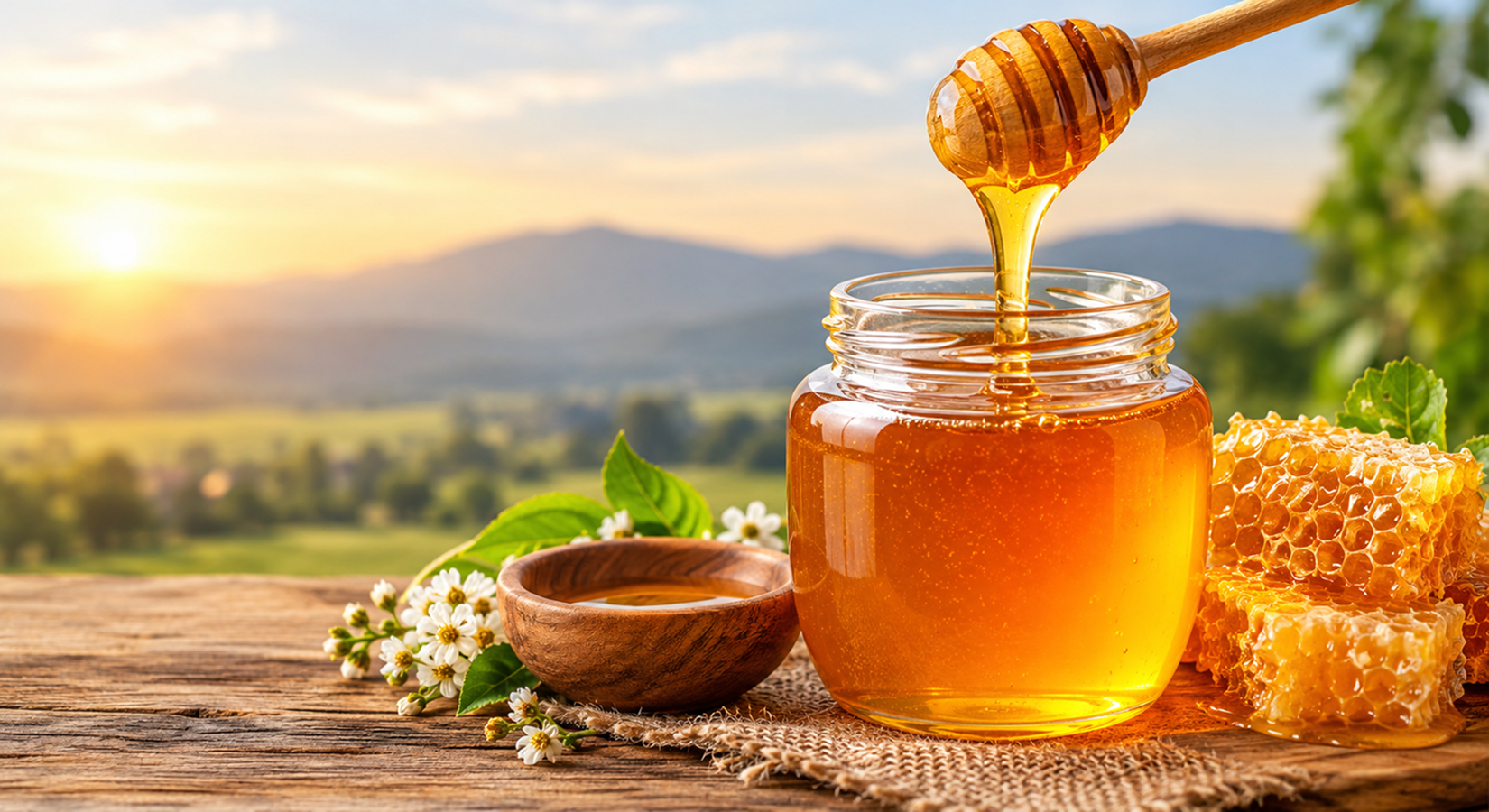
Honey is not merely a natural sweetener; its particular taste, smell, color, and texture are all characteristics that show where the nectar the bees collected came from. Yet since there are so many kinds available in shops and on the internet, it can be confusing to know which honey is genuine. By understanding what gives honey its purity, learning how to interpret the labels on the packages, and realizing which quality signs are important, you will be in a better position to make a sound choice when buying honey.
It’s important to know what to look for if you plan to eat honey with your breakfast, mix it into hot drinks, or use it as a natural sweetener in recipes; this guide will enable you to select good quality raw honey with greater confidence.
Honey is usually the kind that has been through little processing and hasn’t been heated or filtered to any great extent. The amount of the honey’s natural pollen and other elements that it contains will depend on the way it is handled.
True honey should consist of honey only and not include added sugar syrups, artificial sweeteners, or any other unnecessary ingredients. Yet the presence of the word ‘raw’ on the label does not in itself prove that it is pure. Just as important as this are responsible sourcing, clear labeling, and reliable quality testing.
Various kinds of flowers also provide different kinds of experience; mustard honey can have a particular floral character, and forest honey may have a more intense and richer flavor. The best option will be one that suits your taste preferences and the way you plan to use it.
Before buying the product, it is necessary to check the ingredient list; since honey sold under the name “honey” is not allowed to contain any other food ingredients according to Indian food standards, a label that simply lists honey as the only ingredient is a good place to start.
A large number of shoppers are looking for pure honey without sugar that contains no sugar, that is to say, honey in which no sugar has been added or sweetened with syrups. It should be noted that honey naturally contains sugars, namely fructose and glucose, and so it is not a sugar-free food.
A reliable honey brand ought to give useful information regarding its product, for example, the type of flower it comes from, the area where it is sourced, the details of the packaging, and the batch number. Such information enables consumers to understand what they are purchasing and makes it simpler for them to get in touch with the manufacturer if they have any questions.
It is better to select brands that clearly explain their sourcing and quality-control procedures rather than depending just on attractive packaging or general natural-health claims.
It is not possible to reliably tell whether honey is pure by looking at it alone. Laboratory tests can evaluate various parameters, such as moisture content, the composition of the sugars, acidity, and other quality indicators.
The Food Safety and Standards Authority of India (FSSAI) states that ordinary honey has a maximum moisture content of 20% and a minimum total reducing-sugar content of 65%, the general limit for sucrose being 5%, although there are specified exceptions for certain types of honey.
Regulatory limits play a role in determining honey quality, so choose brands that comply with the relevant FSSAI requirements and are able to explain their methods of quality testing.
Natural honey varies from pale gold in color to dark brown, and its texture can be runny, thick, or partly crystallized depending on the type of flowers it comes from, the temperature, and its natural sugar content.
Crystallization is a natural process by which glucose turns into crystals, and this does not imply that the honey is spoiled, artificial, or impure. In the same way, runny honey is not necessarily more genuine than thick honey.
Tests carried out online such as those involving water, the thumb, or flame, cannot reliably determine whether honey is pure. The way honey behaves varies according to its moisture content, temperature, and composition.
Rather than using viral studies, check the label, look at the seller’s level of transparency, examine the batch information, and look at the available laboratory reports. When you are looking at a report, make sure that it concerns the product or batch that was purchased.
Since raw honey tends to undergo less processing, it may keep more of its original features. In the case of processed honey, it may be heated or passed through a fine filter to obtain a uniform texture, appearance, or shelf stability.
Yet just because something is described as ‘raw’ does not mean that it is safer, more nutritious, or entirely free from adulteration, since both the way it is sourced and the way it is handled have an effect on its quality. Honey should never be given to babies under 12 months of age, whether or not it is raw or organic, due to the risk of infant botulism.
Store honey in a clean, airtight container in a cool, dry location, away from direct sunlight. It is important always to use a clean and dry spoon and to close the lid after each use, since the introduction of moisture may cause fermentation and have an effect on the quality.
Refrigeration is usually unnecessary and may in fact cause honey to thicken or crystallize more rapidly. In the case of honey that has crystallized and is therefore inconvenient to use, the sealed jar should be gently warmed in warm water without heating it too much.
You should look at the ingredient list, the manufacturer’s information, the batch details, and the available laboratory tests, since color, thickness, taste, and simple home tests on their own cannot prove purity.
Honey that is sold as honey must not include any added sugar or other food ingredients. Yet, since it contains fructose and glucose naturally, pure honey is not sugar-free.
Crystallization is usually a natural change in texture and does not in itself show that the product has gone bad; you should look for any odd smells, signs of fermentation, or other indications that point to incorrect storage.
Check the ingredient list, the net quantity, the manufacturer’s details, the batch information, the details of the food business registration or license, and the available quality-testing information. Purchase from sellers who give a clear explanation of their products.
The process of selecting good honey should be based on making informed choices rather than on assumptions about its color, consistency, or the claims made by marketers. You should check the ingredients, understand the phenomenon of natural crystallization, look at the information regarding where the honey comes from, and choose those brands which take quality control seriously.
If you are looking for the best raw honey in India, you should pay attention to transparency, proper testing, and careful handling rather than relying on unverified claims. Moreover, if you want to find honey that does not contain sugar, keep in mind that true honey does have naturally occurring sugars but must not include any added sweeteners. By using these practical criteria, you will be able to make more confident choices and enjoy the honey’s natural taste as part of a well-balanced diet.
Honey is not merely a natural sweetener; its particular taste, smell, color, and texture are all characteristics that show where the nectar the bees collected came from. Yet since there are so many kinds available in shops and on the internet, it can be confusing to know which honey is genuine. By understanding what gives honey its purity, learning how to interpret the labels on the packages, and realizing which quality signs are important, you will be in a better position to make a sound choice when buying honey.
It’s important to know what to look for if you plan to eat honey with your breakfast, mix it into hot drinks, or use it as a natural sweetener in recipes; this guide will enable you to select good quality raw honey with greater confidence.
Honey is usually the kind that has been through little processing and hasn’t been heated or filtered to any great extent. The amount of the honey’s natural pollen and other elements that it contains will depend on the way it is handled.
True honey should consist of honey only and not include added sugar syrups, artificial sweeteners, or any other unnecessary ingredients. Yet the presence of the word ‘raw’ on the label does not in itself prove that it is pure. Just as important as this are responsible sourcing, clear labeling, and reliable quality testing.
Various kinds of flowers also provide different kinds of experience; mustard honey can have a particular floral character, and forest honey may have a more intense and richer flavor. The best option will be one that suits your taste preferences and the way you plan to use it.
Before buying the product, it is necessary to check the ingredient list; since honey sold under the name “honey” is not allowed to contain any other food ingredients according to Indian food standards, a label that simply lists honey as the only ingredient is a good place to start.
A large number of shoppers are looking for pure honey without sugar that contains no sugar, that is to say, honey in which no sugar has been added or sweetened with syrups. It should be noted that honey naturally contains sugars, namely fructose and glucose, and so it is not a sugar-free food.
A reliable honey brand ought to give useful information regarding its product, for example, the type of flower it comes from, the area where it is sourced, the details of the packaging, and the batch number. Such information enables consumers to understand what they are purchasing and makes it simpler for them to get in touch with the manufacturer if they have any questions.
It is better to select brands that clearly explain their sourcing and quality-control procedures rather than depending just on attractive packaging or general natural-health claims.
It is not possible to reliably tell whether honey is pure by looking at it alone. Laboratory tests can evaluate various parameters, such as moisture content, the composition of the sugars, acidity, and other quality indicators.
The Food Safety and Standards Authority of India (FSSAI) states that ordinary honey has a maximum moisture content of 20% and a minimum total reducing-sugar content of 65%, the general limit for sucrose being 5%, although there are specified exceptions for certain types of honey.
Regulatory limits play a role in determining honey quality, so choose brands that comply with the relevant FSSAI requirements and are able to explain their methods of quality testing.
Natural honey varies from pale gold in color to dark brown, and its texture can be runny, thick, or partly crystallized depending on the type of flowers it comes from, the temperature, and its natural sugar content.
Crystallization is a natural process by which glucose turns into crystals, and this does not imply that the honey is spoiled, artificial, or impure. In the same way, runny honey is not necessarily more genuine than thick honey.
Tests carried out online such as those involving water, the thumb, or flame, cannot reliably determine whether honey is pure. The way honey behaves varies according to its moisture content, temperature, and composition.
Rather than using viral studies, check the label, look at the seller’s level of transparency, examine the batch information, and look at the available laboratory reports. When you are looking at a report, make sure that it concerns the product or batch that was purchased.
Since raw honey tends to undergo less processing, it may keep more of its original features. In the case of processed honey, it may be heated or passed through a fine filter to obtain a uniform texture, appearance, or shelf stability.
Yet just because something is described as ‘raw’ does not mean that it is safer, more nutritious, or entirely free from adulteration, since both the way it is sourced and the way it is handled have an effect on its quality. Honey should never be given to babies under 12 months of age, whether or not it is raw or organic, due to the risk of infant botulism.
Store honey in a clean, airtight container in a cool, dry location, away from direct sunlight. It is important always to use a clean and dry spoon and to close the lid after each use, since the introduction of moisture may cause fermentation and have an effect on the quality.
Refrigeration is usually unnecessary and may in fact cause honey to thicken or crystallize more rapidly. In the case of honey that has crystallized and is therefore inconvenient to use, the sealed jar should be gently warmed in warm water without heating it too much.
You should look at the ingredient list, the manufacturer’s information, the batch details, and the available laboratory tests, since color, thickness, taste, and simple home tests on their own cannot prove purity.
Honey that is sold as honey must not include any added sugar or other food ingredients. Yet, since it contains fructose and glucose naturally, pure honey is not sugar-free.
Crystallization is usually a natural change in texture and does not in itself show that the product has gone bad; you should look for any odd smells, signs of fermentation, or other indications that point to incorrect storage.
Check the ingredient list, the net quantity, the manufacturer’s details, the batch information, the details of the food business registration or license, and the available quality-testing information. Purchase from sellers who give a clear explanation of their products.
The process of selecting good honey should be based on making informed choices rather than on assumptions about its color, consistency, or the claims made by marketers. You should check the ingredients, understand the phenomenon of natural crystallization, look at the information regarding where the honey comes from, and choose those brands which take quality control seriously.
If you are looking for the best raw honey in India, you should pay attention to transparency, proper testing, and careful handling rather than relying on unverified claims. Moreover, if you want to find honey that does not contain sugar, keep in mind that true honey does have naturally occurring sugars but must not include any added sweeteners. By using these practical criteria, you will be able to make more confident choices and enjoy the honey’s natural taste as part of a well-balanced diet.