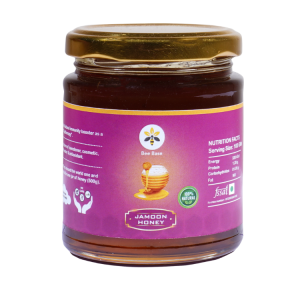
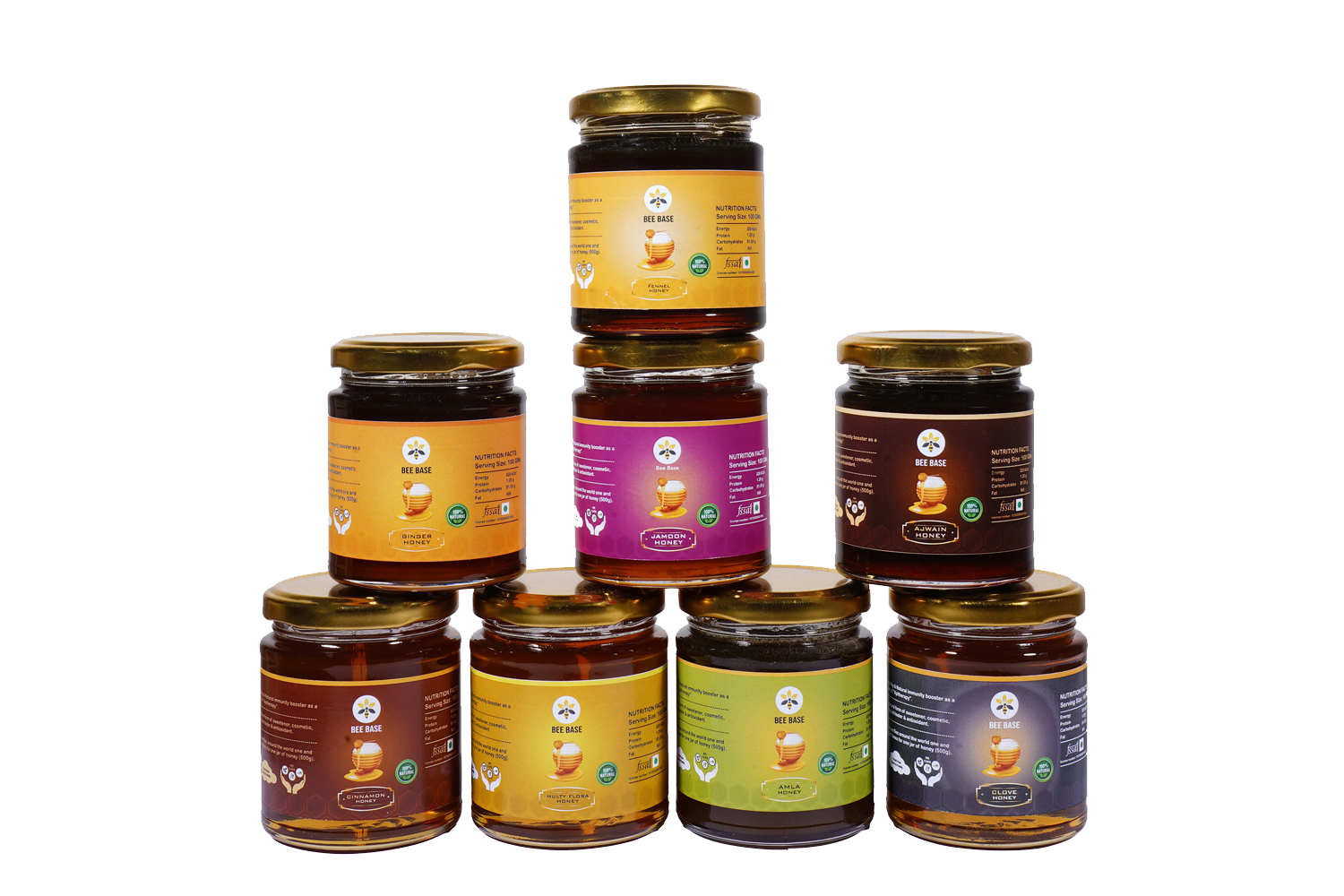
Jamun Honey
Jamun honey is a dark, bold-tasting honey made by bees that collect nectar mainly from the flowers of the jamun tree, also known as Indian blackberry. At Bee Base, our Jamun honey is raw and only filtered before packing. A sample from each batch is tested at a third-party, FSSAI-nominated laboratory, and our honey is NMR tested.
Below you will find what Jamun honey is, how it tastes, how to use it, and what current research does and does not say about honey and blood sugar.
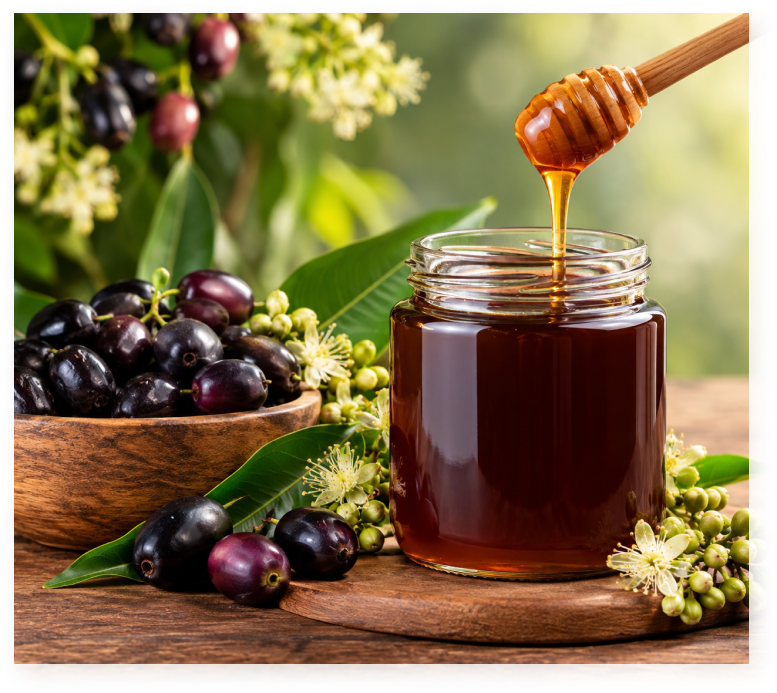
Jamun honey is a single-flower honey. Bees make it from the nectar of jamun tree blossoms (Syzygium cumini), which appear for a short period each year before the fruit season.
Jamun honey is made from the flower’s nectar, not from the fruit or the seed. This matters, because much of what people read online about jamun refers to the fruit or seed. Those are different parts of the plant, and their properties do not automatically carry over to the honey.
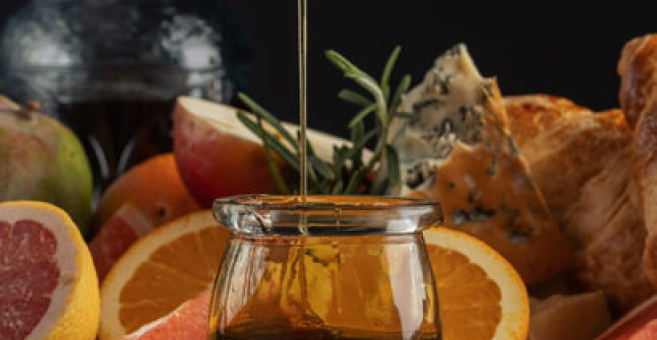
Jamun honey is darker than most everyday honeys and has a deep, bold flavour. People who find regular honey too mild often enjoy it.
It also tends to stay liquid longer than many other honeys. Crystallisation depends partly on how much glucose a honey contains, and Jamun honey is usually lower in glucose. Like any raw honey, though, it can still thicken over time, especially in cool weather. That is natural and does not affect quality.
Our Process: Freshness in Every Step
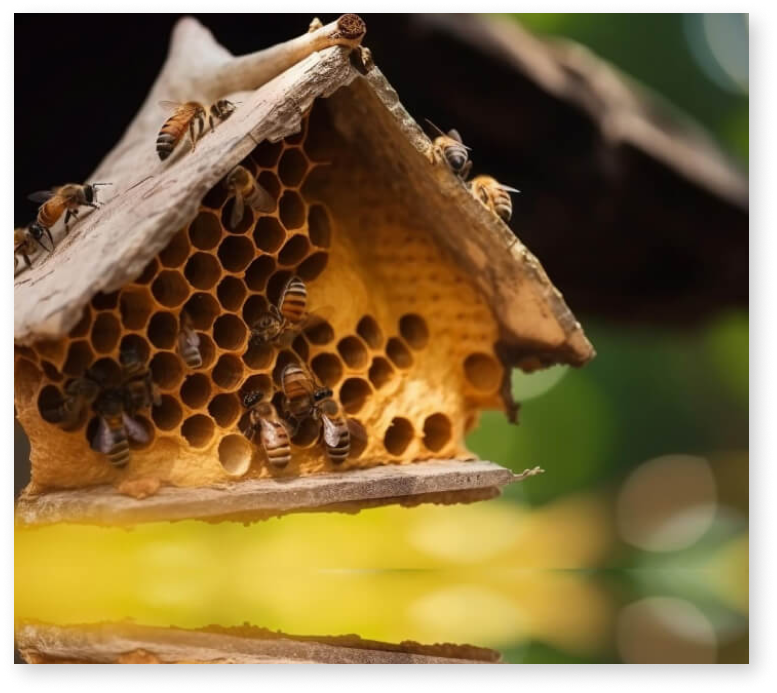
Bee Base keeps its own bee hives, so honey production happens under our supervision rather than being bought in and repacked.
Our beekeepers move the hives to areas where plants are coming into bloom, so the bees have fresh nectar close by.
We harvest only the extra honey the colony has stored, leaving the bees what they need.
Our honey comes from bee rearing. We do not burn hives or use heavy smoke on colonies.
After harvest, the honey is filtered to remove wax particles. There is no other processing.
A sample from every batch goes to a third-party, FSSAI-nominated laboratory, and our honey is NMR tested.
This is the most common question about Jamun honey. The honest answer is that there is not enough evidence to call it safe or suitable for people with diabetes.
Research on Jamun honey itself is still limited. A study that analysed 82 samples found lower glucose levels and lower combined glucose and fructose content than many other honeys, with a high fructose-to-glucose ratio. The researchers suggested this could point to a lower glycemic index. However, that study measured the honey’s chemical makeup. It did not test glycemic index in people or check blood sugar in people with diabetes. sciencedirect niyamaya
What we can say clearly:
Jamun honey’s stronger flavour works well where you want the honey to stand out:
A few simple checks can help you pick honey you can trust:
Ask the brand how it sources its honey. A seller with its own hives can explain the process clearly.
Look for independent lab testing and NMR testing, not just a "100% pure" label.
Jamun honey should list honey as the only ingredient.
Dark colour is typical of Jamun honey, but colour by itself cannot confirm the flower source or purity.
Be cautious of any honey sold with claims that it controls or cures diabetes. The current evidence does not support that.
Jamun honey comes mainly from jamun tree blossoms, while many everyday honeys come from a mix of flowers. Jamun honey is usually darker, stronger in flavour and lower in glucose than many other honeys.
No. Bees make Jamun honey from the nectar of jamun flowers. It does not contain jamun fruit pulp or seed.
Jamun honey tends to crystallise more slowly because it usually contains less glucose. This is normal for this type of honey.
No. Our Jamun honey is raw honey with no added sugar or syrup. It is filtered and packed, and each batch is tested.
Children over one year old can have honey. Do not give any honey, including Jamun honey, to babies under 12 months.
On Orders over Rs 999
30 Days money return
Hotline : (9924111868)
Protected Online Payments